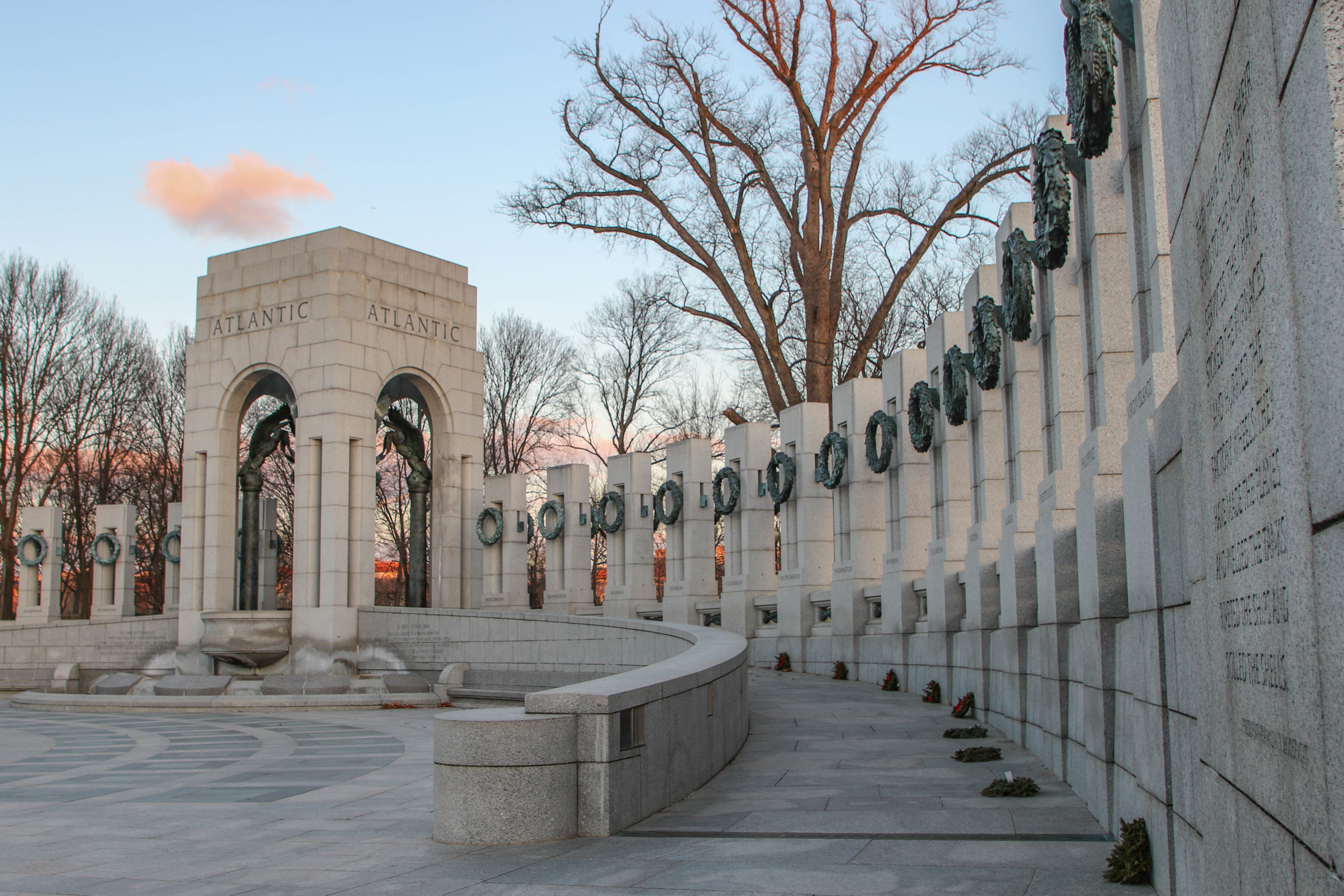
World War II Honoree
World War II Veteran
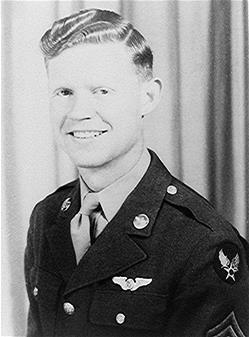
Dwight E. Collins
Branch of Service
U.S. Army Air Force
Hometown
Brevard, North Carolina
Honored By
Olive Collins, Wife, Rodney Collins, Son
Relationship
Brenda C. Heidner, Daughter
He was 21 when he enlisted in the U.S. Army Air Forces, August 25, 1942, at Camp Croft, South Carolina. Following basic training, he spent the next months at Air Corps Tactical Schools in Chicago, Illinois; Madison, Wisconsin; Sioux Falls, South Dakota; and Smyrna, Tennessee, preparing to be a radio operator aboard a B-29 Superfortress bomber. In October 1944, he was assigned to a B-29 crew being formed and trained at Clovis Army Airfield, New Mexico. Following additional training as a crew, they were assigned to ferry a new B-29 from Herington Army Airfield, Kansas, to Chakulia Airfield, India. In late 1944, he and crew were assigned to B-29 #42-6237 of the 40th Bomb Group of the XXth Bomber Command, operating out of the U. S. air base at Hsinching, in western China. Their first mission was scheduled for November 11, 1944. Primary target was the Omura aircraft factory on the island of Kyushu, Japan. Secondary target, in the event Omura could not be struck, was the port at Shanghai, China; the tertiary target would be the dry docks at Nanking, China. Bombing was to be done visually, during daylight, from high altitude, 20,000 feet or higher. Bomb load was eight 500-pound general-purpose bombs and four 500-pound M-76 incendiary bombs. Takeoff was set for 0300. Later, in flight, the mission was diverted to Nanking due to weather. Over the target, their aircraft was hit by antiaircraft fire, setting fire to the aft bomb bay and the number-four engine. Unable to extinguish the fire, most of the crew managed to bail out. He landed next to a rice paddy, in shock. As one of the crew was helping staunch a gash on his head, the ground around them suddenly erupted in a volley of gunfire. A Japanese patrol about 500 yards away had spotted the five men and was running down the hill shooting at them. Just as quickly, from out of nowhere, appeared a dozen or more Chinese guerrilla soldiers motioning for them to run down the ditch with them, all the while returning fire. The Chinese ran them as hard as possible the rest of the day. A few of the Chinese remained behind at the rice paddy to hold off the Japanese patrol until the airmen could make good their escape. After dark, they were taken to a small mud hut, where there was straw on the ground, and they collapsed onto the straw for a few hours of sleep. The airmen used their bi-lingual pictograph 'pointy-talkie' to ask the Chinese if they could return them to U. S. forces. With a smile, they nodded their heads as if it were just over the next hill. At this point, the airmen judged they were several hundred miles behind Japanese lines and, what they had at first assumed were Chinese guerrillas were actually elements of the communist New 4th Army. Dressed in Chinese uniforms and escorted each day by 10-15 troops, the airmen spent the next several months evading Japanese patrols while they made their way cross-country toward the New 4th Army headquarters at Yenan. Most days, they would be handed off to a different Chinese unit, usually with an interpreter. Upon reaching their destination at Yenan, they were told that a U.S. aircraft would be arranged to pick them up. On March 3, 1945, at the designated time, a stripped-down B-25 Mitchell bomber landed while four P-51 Mustang fighters circled overhead. The five B-29 crew members all clambered aboard the B-25 and were flown to Kunming, China, to be debriefed by U.S. intelligence officers. He was returned to the U.S. March 26, 1945, and was honorably discharged, November 6, 1945, at Seymour Johnson Field, North Carolina. Campaigns: Air Offensive Japan, 1944; India Burma, 1944; Central Burma Army Air Forces. Decorations: American Theater Service Medal, Asiatic-Pacific Theater, Good Conduct Medal 1944, WWII Victory Medal twice, and 1 service stripe and 1 overseas service bar.