
World War II Honoree
Civilian on the Home Front
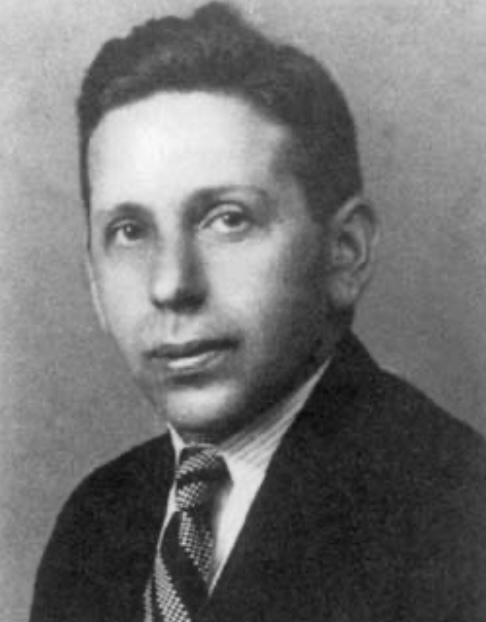
Abraham Wald
Hometown
New York, New York
Honored By
Ralph Bozorth
Relationship
Gratefull American

He was a Hungarian and American mathematician and statistician who contributed to decision theory, geometry and econometrics, and founded the field of sequential analysis. One of his well-known statistical works was written during World War II on how to minimize the damage to bomber aircraft and took into account the survivorship bias in his calculations. He spent his research career at Columbia University during World War II and was a member of the Statistical Research Group (SRG), where he applied his statistical skills to various wartime problems. The problems that he worked on included methods of sequential analysis and sampling inspection. Another was to examine the distribution of damage to aircraft returning after flying missions to provide advice on how to minimize bomber losses to enemy fire. Wald derived a useful means of estimating the damage distribution for all aircraft that flew from the data on the damage distribution of all aircraft that returned. His work is considered seminal in the discipline of operational research, which was then fledgling. There was a difficulty in that his work was secret and this impasse led to a facetious suggestion that each page he wrote should immediately be snatched away and never shown to him again. This was resolved when a federal court granted him a hearing long before his turn on the docket and promptly naturalized him.